
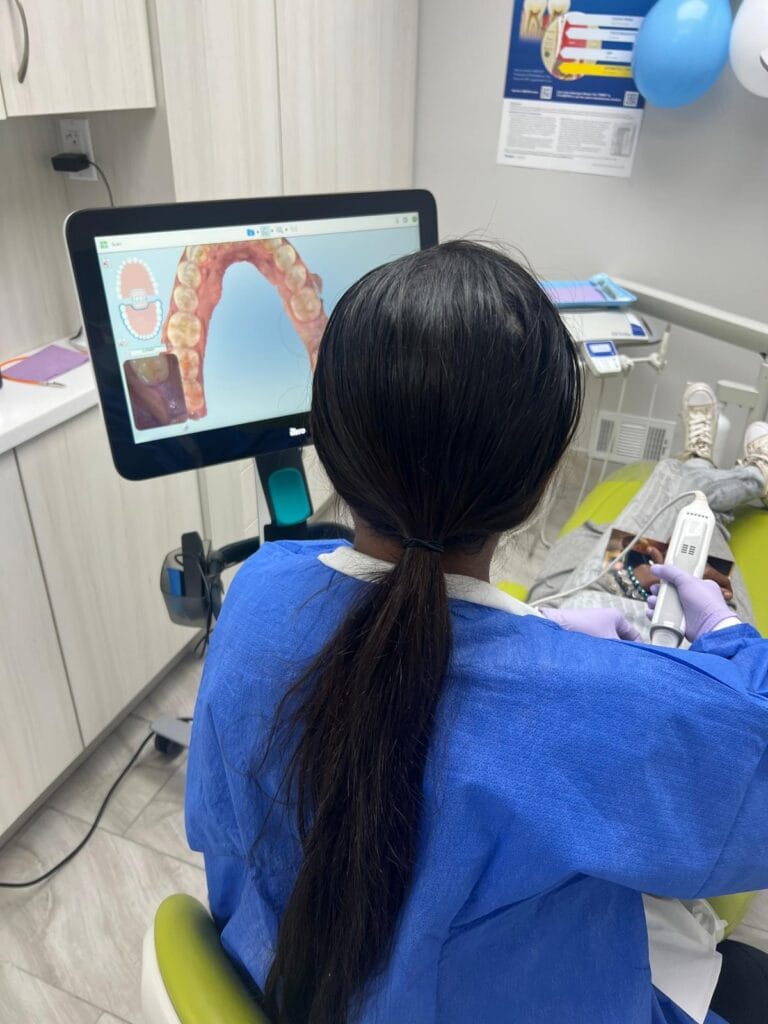
Parents often notice their child’s discomfort when they drink cold water or eat ice cream, for example. Many parents have wondered whether the sensitivity of their child’s teeth is a sign of potential cavities. The reality is that tooth sensitivity does not always mean there is a cavity present. While cavities are one possibility, there are many other reasons why your child may experience discomfort or tingling of their teeth.
Understanding the reasons for your child’s sensitivity, it can help you to protect your child’s oral health and relieve any undue anxieties you may have regarding your child’s teeth.
The reason that some teeth become sensitive is that they are covered by a hard protective layer called enamel, and the actual tooth structure that is underneath the enamel is called dental pulp. When the enamel has become worn down, or has been compromised to expose the underlying pulp, a tooth will often react painfully to cold, hot, sweet and/or sticky food/drink consumption.
Some common reasons for sensitivity are listed below:
- Brushing too hard – If you or your child are brushing too aggressively (too much force) it will wear down the enamel and irritate the gums.
- Gum recession – Gum tissue pulling away from the teeth, exposing the roots of the teeth.
- Grinding/clenching – Many children grind their teeth while they are asleep, therefore causing thinning of the enamel on the teeth.
- Cracked/chipped – Even minor cracks in the teeth can expose nerves in the tooth causing sensitivity.
- Recent dental work – If a tooth has been repaired (filled) or cleaned, it may be temporarily sensitive.
In summary, sensitivity may indicate there is an underlying problem, but it usually does not point to cavities.
How To Recognize A Cavity
Cavities continue to be one of the most common causes of toothache. If you believe you have developed a cavity, the following are common symptoms to look out for:
- Constant pain in an individual tooth
- Darkened areas or holes present on the tooth
- Sensation of pain and/or discomfort when consuming sugary products
- Swelling and/or tenderness in the tissue surrounding the affected tooth
If you notice any of the above signs/symptoms, arrange an appointment with your dental provider as soon as possible; the earlier you schedule treatment for a cavity, the less likely it will worsen.
How To Help Reduce Tooth Sensitivity At Home
You can assist your child in managing tooth sensitivity while awaiting your scheduled appointment:
- Use a soft-bristled toothbrush with a soft touch
- Use a toothpaste for sensitive teeth
- Limit your child’s intake of acidic and/or sugary foods/drinks
- Assist your child in ensuring good oral hygiene by encouraging proper brushing and flossing techniques
- Consider purchasing a nightguard for your child if they tend to grind their teeth
By establishing these simple oral hygiene habits, you can help to protect your child’s enamel and increase their comfort level.
The Importance of Professional Care
Even if decay isn’t the root cause of your child’s sensitivity, it is important to visit the dentist so that a dentist can assess the situation. Children’s dental specialists can determine the underlying causes of your child’s sensitivity, make appropriate recommendations for treatment, and help avoid future complications.
In addition, modern dentistry has ways to treat your child’s dental needs that are minimally invasive, efficient and will keep your child comfortable while receiving treatment. By addressing sensitivity early on, you can help maintain your child’s teeth and gums throughout their life.
Schedule Your Child’s Dental Checkup
If your child has sensitive teeth, don’t wait. Timely evaluation ensures comfort, proper care, and a healthy smile.
📅 Schedule an appointment today:
🌐 https://ohmdentalpiscataway.com/
📞 (908) 205-8585
Remember: sensitive teeth aren’t always cavities, but they are worth checking. Early care saves pain and protects your child’s smile.